

Discover how managed IT support can reduce downtime by focusing on prevention rather than just quick fixes. Learn the hidden costs of reactive IT support.

October 7, 2026
Managed IT support only truly lowers downtime when providers are measured by how well they prevent problems, not just how quickly they respond after something breaks. Paying for response speed alone means businesses keep absorbing the costs of interruptions that could have been avoided.
Picture a Bakersfield retail office on a Monday morning: the point-of-sale network freezes, the backup server hasn't been checked in months, and the help desk ticket sits in a queue behind a dozen others. That scenario is exactly what the wrong kind of managed IT support leaves on the table, and it's worth asking why.
When managed IT support is set up to respond only after a problem surfaces, the cost shows up as more than lost time. Every system crash, network interruption, or lost file translates into lost productivity and extra expense that compounds fast.
That compounding effect traces back to how the contract is built. A managed IT contract that measures nothing but how fast tickets get closed can trap a business in a cycle of the same issues recurring, because speed of repair says nothing about whether the repair was ever needed in the first place. The real value shows up when a provider is focused on stopping problems before they start.
Managed IT support, then, is more than a help desk. It's a partnership meant to keep a business running smoothly, not just to patch things after they break, and the metric a provider is judged on ends up shaping how well systems stay up and running.
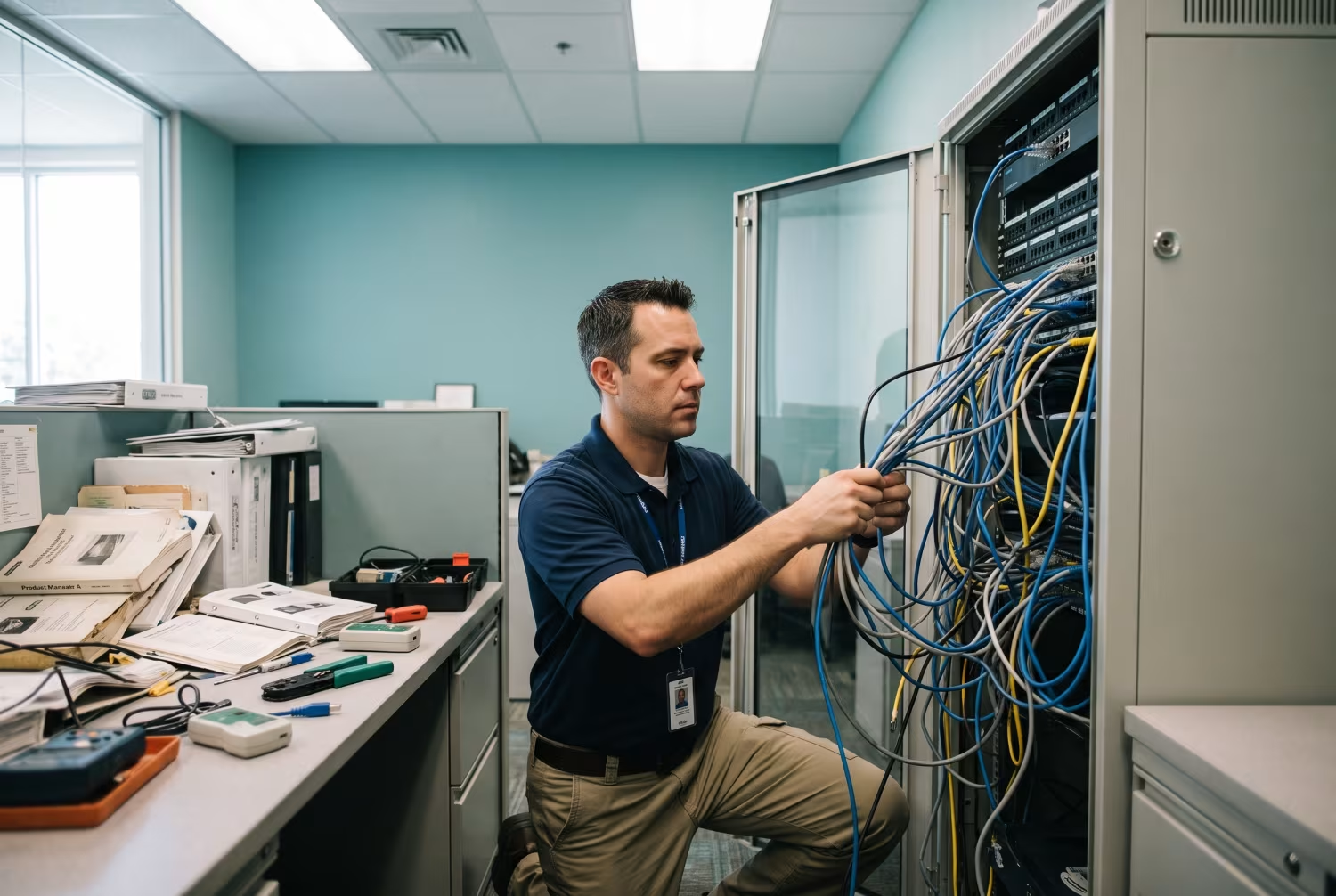
Most businesses expect managed IT support to cut downtime, yet not every support model actually delivers that. When a provider is rewarded for closing tickets quickly, its attention shifts toward solving problems after they happen rather than preventing them.
That setup can look efficient on the surface, since responses feel fast and issues get cleared off the board. But underneath, every interruption still breaks the team's workflow and can turn into a missed deadline or a slice of lost revenue.
Repeated often enough, those interruptions turn genuinely expensive. The cost isn't only the IT invoice — it's the hours staff spends waiting, the opportunities that slip past, and the client trust that erodes a little each time. A reactive model may look clean in a report, but it tends to hide the real weight of downtime.
A different approach measures success by how few problems occur rather than how fast they get fixed, and that distinction changes the provider's entire posture. Providers evaluated on prevention operate differently from those rewarded for response speed.
They put more hours into proactive maintenance, system updates, and ongoing monitoring, aiming to catch risks before they turn into outages or data loss. The result is fewer interruptions for the team and a steadier day-to-day environment.
Because fewer recurring issues surface when prevention is the priority, that stability opens room to plan projects, serve customers, and grow the business without constant technical setbacks getting in the way.
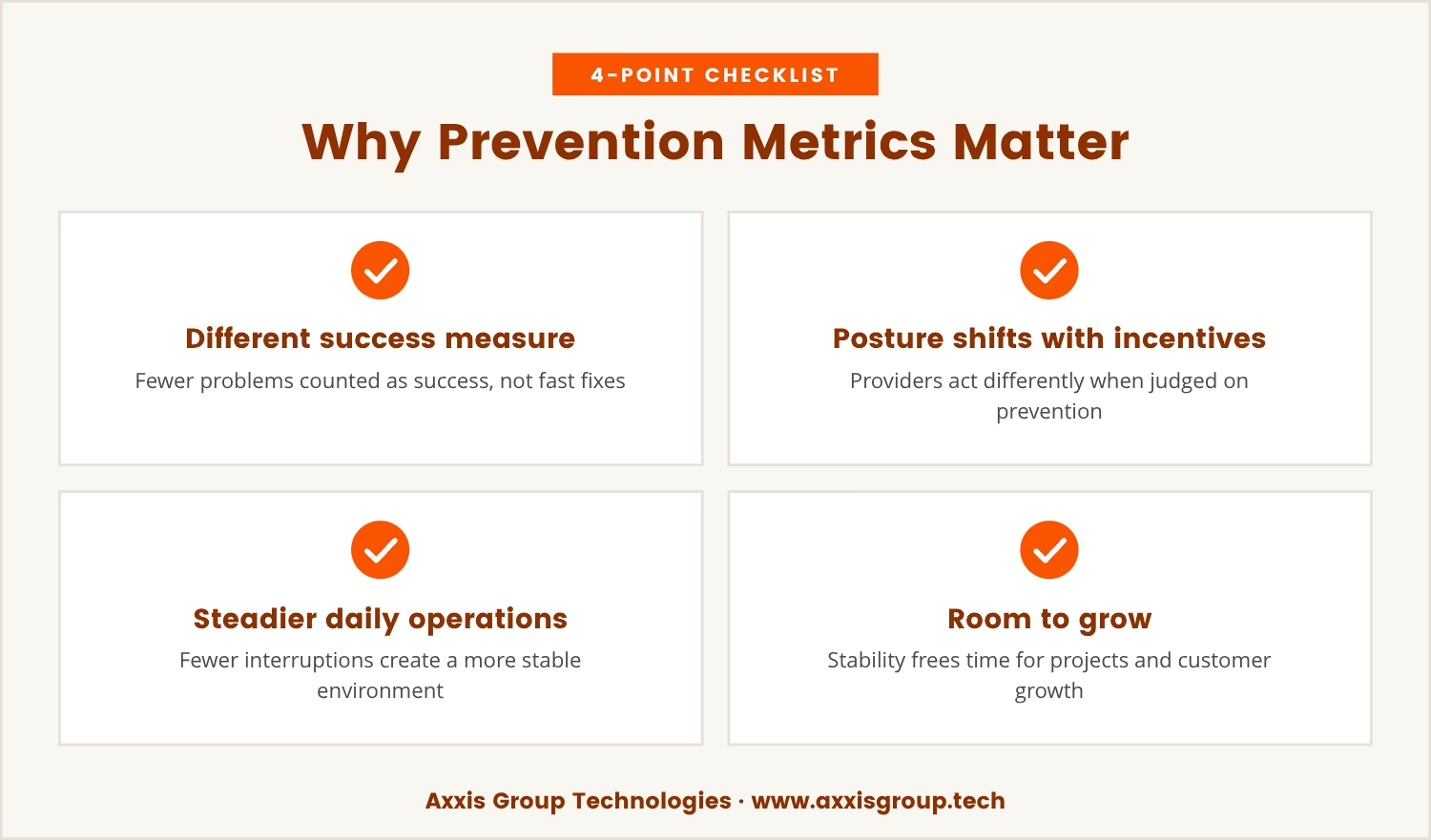
Once a managed IT support provider is measured on prevention instead of speed, both its daily work and the client's experience shift. Here's how that change plays out in practice:
Instead of waiting for something to break, the provider uses monitoring tools to catch early warning signs. Issues get addressed before they escalate into outages.
Scheduled updates and routine checks keep systems current and secure. That steady maintenance reduces vulnerabilities and heads off many common failures before they start.
The provider reviews the infrastructure for weak points, which makes it possible to plan upgrades or changes before problems arise. That forward view keeps the business ahead of potential threats rather than reacting to them.
Prevention isn't only technical. Staff training helps the team avoid risky behaviors that lead to downtime, with phishing emails being a common example.
Backups tested on a regular schedule mean faster recovery when something does go wrong, which limits how far any single interruption can spread.
Reports show not just how many tickets closed, but how many issues never had the chance to happen, giving a clearer picture of overall IT health.
Choosing the right provider means looking past fast ticket resolution toward what's being prevented in the first place. A few practical signs point to a provider built around prevention:
A provider offering these is investing in keeping the business running, not only in fixing what already broke.
Business continuity planning covers more than backups alone; it's a strategy for keeping operations running during and after an IT incident, and managed services support built around prevention plays a central part in that process.
By flagging risks early, a provider helps build a plan that reaches beyond data recovery alone, mapping out how to keep the team productive, keep communication open, and protect the company's reputation during unexpected events.
With that groundwork in place, a business is far less likely to get caught flat-footed by an outage or a cyberattack. Clear steps exist to follow, backed by a partner invested in long-term stability rather than short-term fixes.
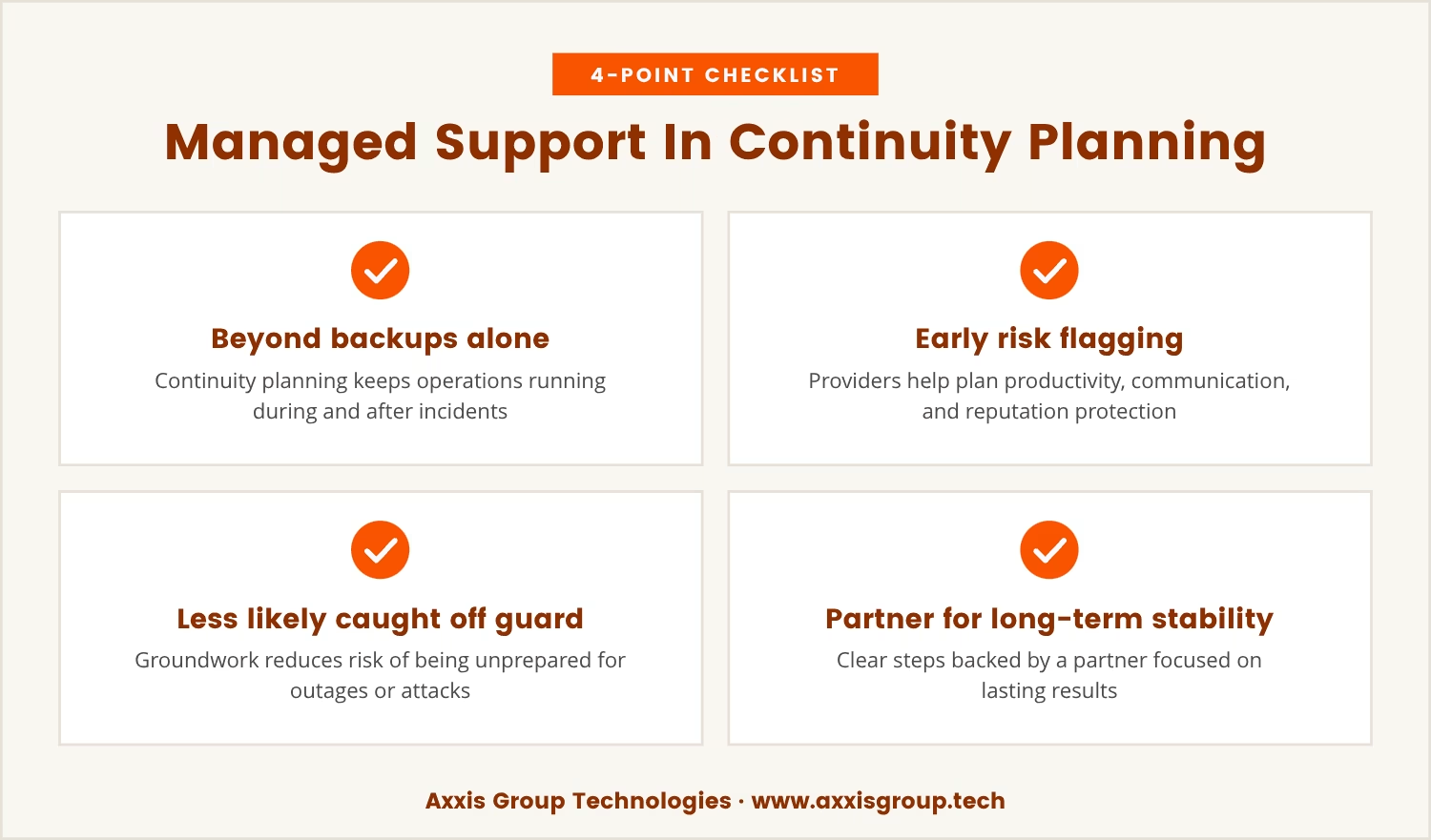
In Bakersfield, where daily operations lean heavily on technology, even a short stretch of downtime can land hard. Local companies face the same risks larger organizations do, often with smaller teams and tighter budgets to absorb the hit.
A prevention-first approach to IT support helps sidestep the repeated costs and frustrations that come with reactive service, while also handing back more control over both technology and business outcomes.
Anyone unsure how their current provider is measured might ask: are problems actually becoming less frequent over time, or just getting answered faster once they happen?
Switching to a prevention-focused IT support model takes more than rewriting a contract; it means resetting expectations and the yardstick used to measure success.
What follows tends to be fewer interruptions, more predictable costs, and a stronger sense of control over the technology itself. The provider becomes a partner in growth rather than a help desk reserved for emergencies.
That shift doesn't happen overnight, but the payoff is a business that runs more smoothly and stands better prepared for whatever comes next.

Many businesses with 10 to 150 users find themselves stuck reacting to IT issues, never quite getting ahead of the next interruption. At Axxis Group Technologies, we know how frustrating it is to pay for support that only solves problems after they happen.
We invite you to see how our prevention-first approach can help you break the cycle and keep your systems running smoothly. Let’s talk about what a proactive IT partnership could look like for your business.
We’ll match your current IT costs or beat them by up to 20%—so you can invest in prevention without paying more.
Proactive managed services support uses monitoring, regular maintenance, and early risk detection to stop problems before they disrupt a business. Addressing issues before they become outages keeps systems available and spares the team unnecessary interruptions.
Break-fix support only steps in after something goes wrong, while prevention-focused support works to identify and resolve risks before they cause problems. Prevention-focused providers spend more time on planning, updates, and monitoring, which adds up to fewer emergencies and less downtime.
Business continuity planning ensures an organization can keep operating through unexpected IT incidents. Even a short disruption can be costly for a small business, so a clear plan paired with a prevention-minded provider helps protect both operations and reputation.
Outsourcing IT to a provider familiar with industry standards can make compliance requirements easier to meet. Such a provider can help set up secure systems, monitor for risks, and document processes to satisfy regulatory needs.
Look for regular system reviews, proactive maintenance, and reports that highlight avoided issues rather than just resolved ones. A provider that only talks about how quickly tickets close may not be prioritizing prevention at all.
.jpeg)