

Discover how outsourced IT support can enhance your internal team's focus on strategic projects while managing routine tasks effectively.

October 23, 2026
Choosing an MSP with a broad service menu often means paying for features you never use, while your real risks get less expert attention. Businesses benefit more from providers who specialize deeply in the areas that matter most to them.
Most businesses assume the top MSP companies are the ones with the longest service lists. In practice, breadth often works against the very companies it's meant to protect, since the wrong fit means paying for services you never touch while your real problems get surface-level attention.
The assumption makes sense on the surface: more offerings should mean more coverage. But a wider menu tends to spread a provider's attention so thin that cost rises while focus on what actually matters to your business falls.
A long list of services looks appealing in a sales pitch, and that's precisely the problem—the appeal is in the list, not in the fit. Real value comes from how well an MSP understands and addresses your specific needs, not from how many lines appear on its brochure.

A provider with a long list of managed IT services might look like the obvious choice, since more options should in theory mean better coverage. The reality works against that logic.
When an MSP tries to cover every possible service, its attention splits across too many areas at once. That split pushes teams toward generalist habits, offering basic support everywhere instead of deep expertise where you need it most, so a growing business ends up with generic solutions that don't fit its specific challenges.
Rather than tailored advice or proactive support, you get a one-size-fits-all approach, because the provider's resources are stretched thin and your most pressing risks—cybersecurity, cloud management—go without the focused attention they deserve.
The larger the menu, the more likely you are to pay for capabilities you never use, and that waste runs deeper than a budget line. It also represents a missed chance to strengthen the areas that actually drive your business forward.
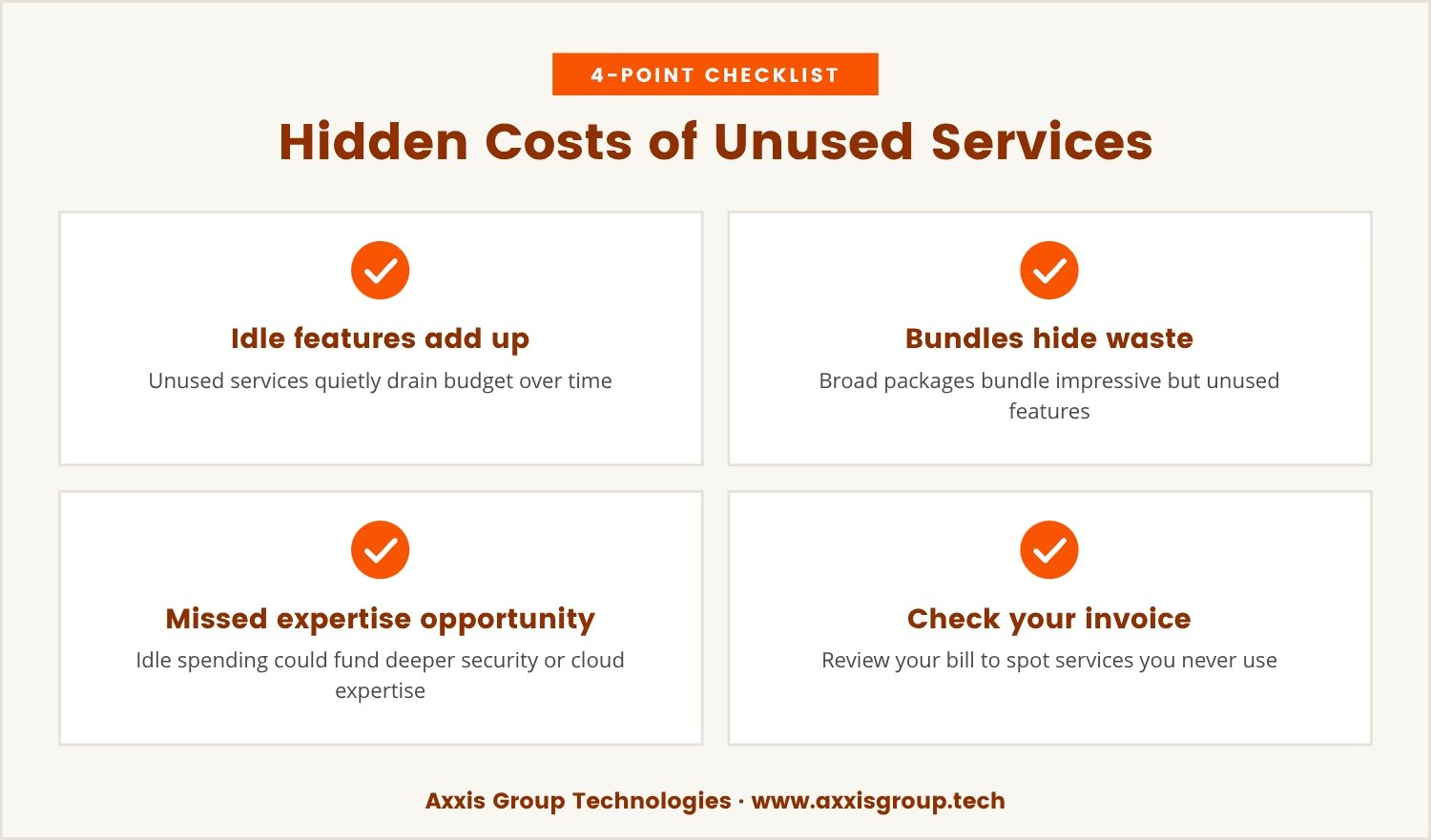
Access to every service under the sun sounds like a smart investment, yet unused services quietly eat into the budget and leave less room for what truly matters.
A broad package often bundles features that sound impressive but never touch your day-to-day operations, and those unnecessary costs accumulate over time. That's especially true for businesses with 10 to 150 users, who need targeted support rather than a laundry list of options.
Money spent on services that sit idle is money that could have gone toward deeper expertise in what you actually rely on, like network security or cloud infrastructure. The trade-off rarely shows itself until you set your monthly bill next to the value you're actually getting.
If you've wondered whether your current MSP IT company delivers what you actually need, the invoice is the place to look: review it, ask which services you use regularly, and you may find you're paying for features that never get turned on.
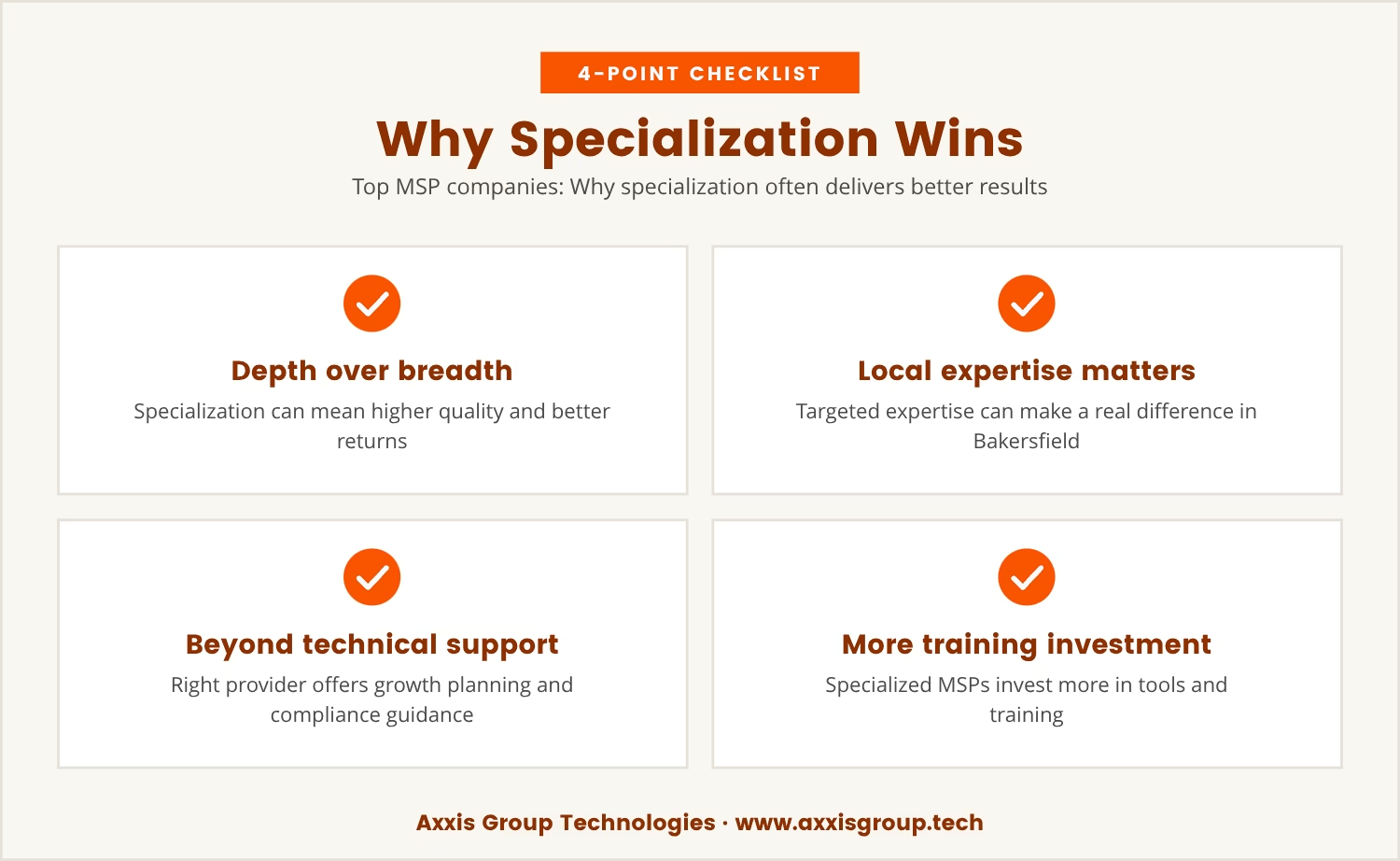
The best managed service provider for your business isn't always the one with the longest list of offerings, since specialization can mean higher quality, more relevant support, and a better return on your investment.
A focused MSP builds deep knowledge in a few key areas, such as cybersecurity or cloud management, and that depth is what lets them spot risks early, recommend the right solutions, and respond quickly when issues arise. For businesses in Bakersfield, that kind of targeted expertise can make a real difference.
A provider who understands your industry and your specific needs offers more than technical support. The partnership extends to planning for growth, avoiding common pitfalls, and staying compliant with the regulations that apply to your sector.
Specialized MSPs also tend to invest more in training and tools for their chosen areas, which translates into better outcomes for you, since doubling down on what matters most beats spreading resources thin across everything.
A managed services firm that narrows its focus can offer several advantages over a generalist provider. Here's how:
Specialized MSPs spend more time learning about the challenges and requirements of your field. That depth means their advice stays relevant and their solutions fit your business instead of a generic template.
With fewer distractions, a focused provider responds more quickly when something goes wrong, because the team knows your systems inside and out and can troubleshoot efficiently.
Rather than waiting for problems to appear, a specialized MSP monitors your environment closely. That ongoing attention means they're more likely to spot vulnerabilities early and act before issues escalate.
Instead of generic packages, these providers build support plans around your actual needs, so you only pay for what you use and get more value from each service.
A focused MSP takes the time to understand where your business is headed, and that understanding is what lets them plan your IT investments so technology supports growth rather than just daily upkeep.
Selecting a managed IT service provider involves more than comparing feature lists. For businesses in Bakersfield, local context matters too, since regulations, industry standards, and the pace of growth all shape what you actually need from a provider.
It's worth asking: Does the MSP understand the specific risks and opportunities in your industry? Are they familiar with the compliance requirements your business faces? A provider who specializes in your sector is more likely to keep you protected and ahead of changes.
Local providers can also offer faster onsite support alongside a sharper read on the challenges companies in your area face. Remote support has its place, but a partner who knows Bakersfield's business landscape makes the difference when quick action is needed.
A wide-ranging MSP might not be the best fit if you notice any of these signs:
Choosing the right MSP starts with a clear read on your own priorities. List the services you actually use and the risks you want addressed, then compare providers on their depth in those specific areas rather than the length of their service menu.
From there, ask potential MSPs about their experience with businesses like yours and request specific examples of problems they've solved that resemble your own. Look for evidence of ongoing training and a track record of proactive support.
Client references and case studies are worth the extra time too, particularly from companies of a similar size and industry, since a provider who can show real results for businesses like yours is more likely to deliver the value you need.
For most growing businesses, a managed service provider with a narrower, deeper specialty delivers better results than one that tries to do it all. Narrowing the focus means you stop paying for unused capabilities and start getting higher-quality support aimed at your actual risks.
The right MSP becomes a true partner from there—one who understands your business, anticipates your needs, and helps you grow with confidence.

If your business has 10 to 150 users, you may be wondering whether your current MSP is truly focused on your needs or just offering a long list of services. At Axxis Group Technologies, we know that businesses like yours want real value, not just a menu of options.
We invite you to see how our team approaches managed IT support differently—by focusing on what matters most to your business, not just what looks good on paper. Let’s talk about how a more specialized partnership can help you grow with confidence.
We’ll match your current IT costs or beat them by up to 20%—so you can get focused support without paying for extras you don’t use.
An MSP company is a managed service provider that proactively manages and monitors IT systems rather than fixing things only after they break. Traditional IT support often works on a break-fix model, while an MSP aims to prevent problems before they disrupt the business.
A business that relies on technology for daily operations, stores sensitive data, or must meet compliance requirements benefits from the ongoing protection managed IT services provide. This approach prevents downtime and security risks rather than reacting after they occur.
Yes, many specialized MSPs design their services to grow alongside a business. They focus on the areas that matter most and adjust their support as needs change, so the business doesn't outgrow their expertise.
Look for a provider with direct experience in your specific industry and a strong grasp of the regulations you must follow. They should offer guidance on compliance and keep systems in place that secure your data and keep the business audit-ready.
Outsourcing IT to an MSP gives a small business access to advanced technology and expertise that might otherwise sit out of reach, leveling the playing field so the business can focus on its core work while staying secure and efficient.
.jpeg)