

Discover how outsourced IT support can enhance your internal team's focus on strategic projects while managing routine tasks effectively.

October 23, 2026
Outsourced IT support delivers the most value when it takes over routine tasks, not when it replaces your internal team. Businesses that treat it as an either-or choice risk higher costs or losing key internal knowledge.
A support model usually breaks down the same way: internal staff gets pulled into password resets and printer jams, leaving less time for the planning work only they can do, while an outside provider sits idle on exactly that kind of routine ticket.
The question isn't whether to outsource, but which tasks belong on which side of that line.
Once that distinction is clear, so is the payoff: when outside teams absorb the daily, repetitive tickets, in-house experts get the bandwidth to focus on work that actually moves the business forward.
That's the logic behind most outsourcing decisions — not cutting costs by replacing staff, but containing them by routing routine issues away from the people who know the business best. The internal team keeps strategy and innovation; the outsourced partner keeps the basics running.
Treat the decision as all-or-nothing, though, and one of two things happens: you pay twice for the same work, or you lose the deep institutional knowledge only your own staff carries. The sections below lay out how to strike that balance.

Many businesses lean on their internal IT team for everything from troubleshooting printers to planning major upgrades, and that range is the problem. Skilled staff end up spending hours on simple, repetitive fixes instead of the work that justifies their expertise.
Every hour spent on a password reset or a routine software update is an hour not spent on a project that helps the business grow, and over time that trade-off compounds into missed opportunities and staff burnout.
Routine IT work matters, but it doesn't call for the same business knowledge or strategic thinking as planning a new system or tightening cybersecurity. Shift that routine layer to an outsourced partner, and the internal team gets that time back for what actually needs their judgment.
The payoff shows up in the budget too: it closes off the hidden cost of overqualified staff doing basic work, so both the internal and external teams generate more value for the hours they put in.
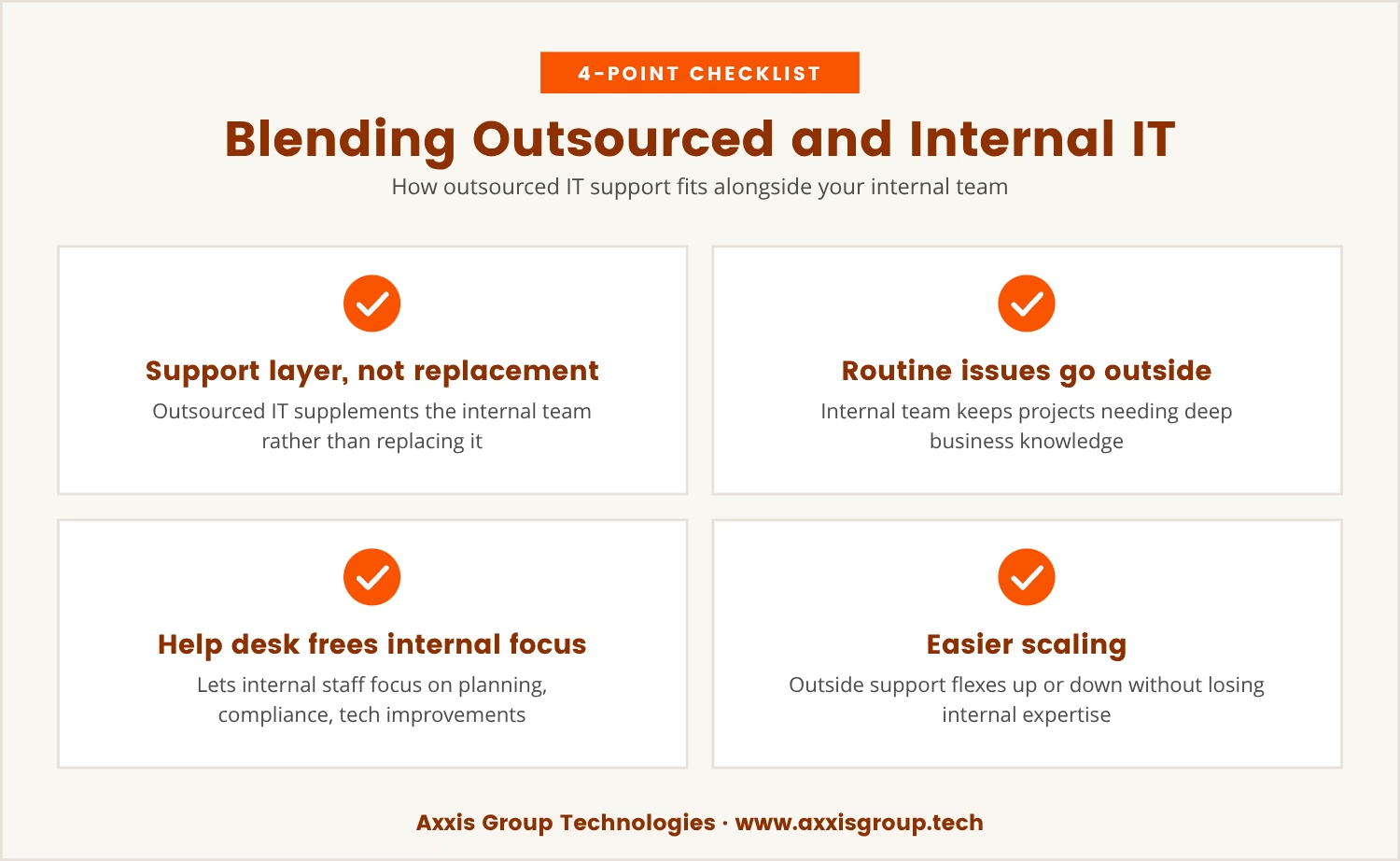
Outsourced IT support works best as a layer underneath the internal team, not a stand-in for it. The most effective setups put routine issues in the outside team's hands while the internal team keeps the projects that need deep business knowledge.
An outsourced help desk, for instance, can field user support and day-to-day troubleshooting, which in turn frees the internal team to concentrate on planning, compliance, and the technology improvements specific to the company.
That division also makes scaling simpler: outside help can expand or contract with current needs, while the expertise sitting inside the business stays intact regardless of how much outsourced support is dialed up or down.
Businesses in Bakersfield run into the same IT pressures companies everywhere else face, but local context shapes how those pressures get handled. Regulations, business culture, and the pool of available service providers all factor into how a support model gets built.
A partner who understands the Bakersfield market brings support that actually fits that environment, since local providers tend to respond faster and know the regional compliance rules already.
Pair that local knowledge with an internal team's grasp of the business itself, and the result is a support structure that's both dependable and shaped around the company's own needs.

That structure pays off in several concrete ways once routine tasks move outside. Here are the key benefits:
With routine work handled externally, that reclaimed time has somewhere specific to go: higher-value activities that only make sense for people who know the business from the inside. These include:
Redirecting effort this way doesn't just make the IT team more effective — it helps the whole business stay competitive.
Getting that redirection right doesn't happen by accident; it takes a deliberate structure. Here's how to build one that keeps both internal and outsourced teams working at their best:
Start by listing every IT task the business needs handled, then sort them: which require deep company knowledge, and which are routine. Strategic and business-specific work goes to the internal team; routine support goes to the outsourced partner.
Look for a provider with a track record supporting businesses like yours, including reliability, response time, and familiarity with your industry. Confirm they can scale their services as needs grow.
A solid service level agreement (SLA) spells out what the provider will do, how fast they'll respond, and how problems get resolved. That clarity keeps everyone aligned and accountable.
Schedule regular check-ins between the internal team and the outsourced provider. Use them to share project updates, flag recurring issues, and adjust responsibilities as needed.
Track how the support structure performs using metrics like downtime, user satisfaction, and project completion rates, and stay ready to shift tasks between teams as those numbers change.
As the company grows or changes, revisit the support model so both internal and external teams stay aligned with current goals and challenges.
Skip that regular reassessment, and the balance tends to break in one of two directions. Some companies push outsourced IT support to fully replace the internal team; others let both teams handle the same work, which just wastes resources.
Remove the in-house experts, and the institutional knowledge that keeps the business running smoothly goes with them. Let both teams cover identical ground, and the business pays more without getting anything extra for it.
The best results land when each team sticks to what it does best — outsourced support handling the basics, the internal team driving the business forward.

If your business has 10 to 150 users, you may be wondering how to keep your internal IT team focused on what matters while still getting reliable support for everyday issues. At Axxis Group Technologies, we see many companies facing this challenge as they grow.
We invite you to see how our approach to routine IT support can free up your in-house experts for the work that truly drives your business forward.
If you’re considering a change, we’ll match your current IT costs or beat them by up to 20%—so you can try a layered support model with less risk.
List all the technology tasks the business handles. Routine activities like password resets, software updates, and basic troubleshooting are good candidates for outsourcing, while strategic work such as planning new systems or handling sensitive data is usually better kept in-house.
Outsourced IT support typically means hiring an external team to handle specific tasks, often on a ticket-by-ticket basis. Managed IT services go further, providing ongoing management, monitoring, and improvement of the entire IT environment with a proactive approach.
A reputable support company can help maintain compliance and improve security, provided the provider has experience in your specific industry. Confirm the agreement covers data protection, privacy, and any regulations that apply to your business.
Set clear roles and responsibilities for each team and schedule regular communication, backed by service level agreements that define expectations. That combination avoids confusion and keeps both teams focused on their strengths.
Small businesses should look for a provider offering flexible support options, industry familiarity, and the ability to scale services as the business grows. Fast response times, clear communication, and a track record of reliability are worth checking for directly.
.jpeg)